Small Town, Big Ideas: How Humboldt County Is Rewriting the Rules of Mental Health Care
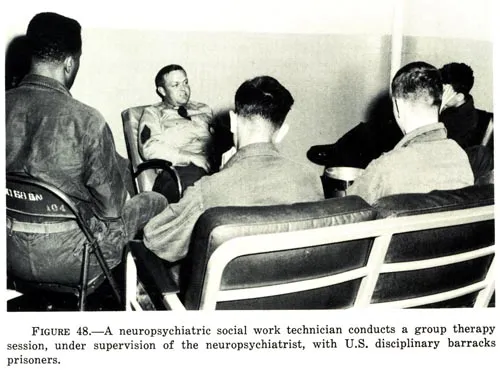
Photo: Unknown authorUnknown author, Public domain, via Wikimedia Commons
When most people think of medical innovation, they picture gleaming research hospitals in San Francisco, Boston, or New York. Rarely does the mind travel to the fog-laced coastlines and ancient redwood corridors of Humboldt County. Yet quietly, and with characteristic Northern California determination, this region is producing mental health solutions that practitioners in major metropolitan areas are beginning to study with genuine interest.
The story of Humboldt's emerging role in mental health innovation is not one of abundant resources or institutional backing. It is, rather, a story born of necessity, community trust, and an intimate understanding of what it means to care for neighbors rather than patients.
The Pressure That Sparked the Progress
Humboldt County has long confronted mental health challenges that are both significant and well-documented. Rates of depression, anxiety, substance use disorders, and suicide have historically exceeded state averages, shaped by factors including economic instability, geographic isolation, and limited access to traditional clinical services. For years, these statistics painted a discouraging portrait.
But within that pressure, something unexpected took root.
When conventional systems proved insufficient — too distant, too expensive, or too culturally disconnected — community members and local health advocates began designing their own responses. The result has been a growing ecosystem of mental health programs that prioritize accessibility, cultural relevance, and human connection in ways that formal clinical models often struggle to replicate.
Peer Support: The Power of Shared Experience
One of the most significant developments in Humboldt's mental health landscape has been the expansion of peer support networks. Unlike traditional therapy, peer support pairs individuals navigating mental health or substance use challenges with trained community members who have lived through similar experiences.
In a county where the nearest specialist may be hours away, this model carries particular weight. Peer supporters are not substitutes for clinical care — they are a vital complement to it. They meet people where they are, whether that means a conversation at a local community center, a check-in call during a difficult week, or accompaniment to a first appointment with a counselor.
Research consistently supports the effectiveness of peer-led interventions for conditions ranging from depression to recovery from opioid use disorder. What Humboldt has demonstrated is that these programs can be built and sustained even in communities with limited infrastructure, provided there is genuine investment in training, supervision, and community trust.
Urban health systems, including several in the San Francisco Bay Area, have sent representatives to observe Humboldt's peer support frameworks — a quiet acknowledgment that rural ingenuity can produce transferable models.
Nature as Therapeutic Infrastructure
Humboldt County possesses something most urban health systems cannot manufacture: an extraordinary natural environment. Old-growth redwood groves, wild Pacific coastlines, river valleys, and mountain meadows surround communities throughout the region. Local mental health practitioners have increasingly recognized this landscape not as a backdrop, but as an active component of care.
Nature-based therapy — sometimes called ecotherapy or green therapy — involves structured therapeutic activities conducted outdoors, ranging from guided forest walks to horticulture programs and wilderness-based group sessions. The evidence base for these interventions has grown substantially over the past decade. Studies have linked time in natural environments to measurable reductions in cortisol levels, improved mood, decreased symptoms of anxiety and depression, and enhanced social connection.
In Humboldt, several community organizations and licensed practitioners have developed programs that integrate the local landscape directly into therapeutic work. These are not informal outdoor activities — they are intentionally designed interventions, often conducted by credentialed professionals who have received specialized training in nature-based modalities.
The irony is not lost on observers: a region sometimes characterized by its remoteness is leveraging that very remoteness as a clinical asset.
Community-Centered Care in Practice
Beyond specific program models, Humboldt's mental health innovation reflects a broader philosophy — one that centers the community itself as a healing resource.
In smaller, more interconnected communities, social trust tends to run deeper. Neighbors know one another. Local business owners, clergy, school staff, and healthcare workers often share overlapping relationships. This social density, when intentionally activated, creates what researchers call "community resilience" — the collective capacity to absorb hardship and support vulnerable members.
Humboldt County organizations have worked to formalize this resilience through initiatives such as Mental Health First Aid training for community members, collaborative care models that link primary care providers with behavioral health specialists, and school-based programs that equip young people with emotional regulation tools before crises emerge.
These efforts reflect an understanding that mental health is not solely a clinical matter. It is shaped by housing stability, economic opportunity, social belonging, and cultural identity — all factors that community-level interventions can meaningfully address.
What Larger Systems Are Learning
The attention Humboldt's approaches have attracted from larger health systems is both validating and instructive. Urban health networks, confronting their own crises of access and engagement, are recognizing that scale does not automatically confer effectiveness. A community health worker embedded in a neighborhood can often achieve outcomes that a well-funded clinic cannot, precisely because of proximity, trust, and cultural fluency.
The lessons emerging from Humboldt are not simply about specific programs. They are about the conditions under which innovation becomes possible: a willingness to work outside traditional hierarchies, a commitment to meeting people where they live, and a recognition that the community itself holds knowledge that no clinical manual can fully capture.
Moving Forward Together
LifeCare Humboldt remains committed to supporting and amplifying the mental health resources available throughout our region. The progress described here is real, but it is also fragile. Sustaining peer support networks, nature-based programs, and community care initiatives requires ongoing investment, advocacy, and public awareness.
Residents of Humboldt County who are navigating mental health challenges — or who want to support those who are — are encouraged to explore the resources available through local organizations, county behavioral health services, and the LifeCare Humboldt network. The innovation happening here belongs to all of us, and its continued growth depends on the same community spirit that created it.
In Humboldt, necessity has always been the mother of invention. When it comes to mental health care, that invention may be exactly what the rest of the country needs to see.