Necessity as a Catalyst: How Humboldt County's Provider Shortage Is Reshaping Rural Medicine Nationwide

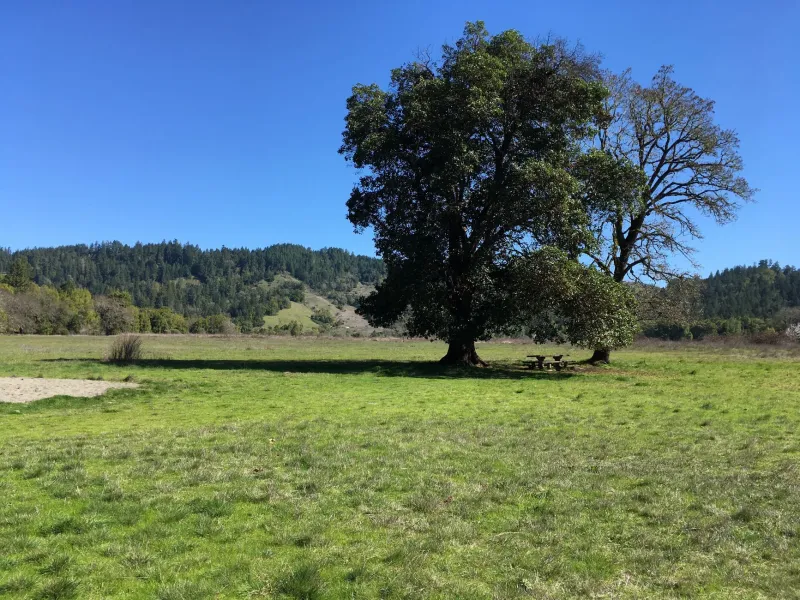
Photo: U.S. Air Force photo by Andrea Jenkins, Public domain, via Wikimedia Commons
For decades, the phrase "healthcare workforce shortage" has carried an almost exclusively negative connotation in conversations about rural communities. It signals longer wait times, reduced access to specialists, and the persistent anxiety of knowing that the nearest emergency department may be farther than comfort allows. Humboldt County has lived this reality in concrete, daily terms.
And yet, something unexpected has emerged from that pressure.
Across the county, health systems, clinics, and community organizations have been compelled — not by inspiration alone, but by genuine operational necessity — to develop care models that are now attracting serious study from rural health researchers, policy analysts, and healthcare administrators in regions facing similar challenges. Humboldt County, it turns out, has been running an unintentional experiment in adaptive medicine. The results are worth examining closely.
The Scope of the Challenge
Humboldt County's difficulty attracting and retaining physicians is not a new problem, nor is it unique to this region. Rural communities across the United States consistently struggle to compete with the salaries, professional networks, and lifestyle amenities that urban medical centers can offer. The Health Resources and Services Administration has designated substantial portions of Humboldt County as Health Professional Shortage Areas, a federal classification that acknowledges the gap between available providers and community need.
Geography compounds the issue. The county's rugged terrain and relative distance from major metropolitan centers create logistical barriers that make recruitment an ongoing challenge regardless of economic incentives. Medical school graduates, many of whom carry significant student debt, often weigh those factors heavily when choosing where to establish their practices.
The result has been a healthcare landscape that, by conventional metrics, appears under-resourced. But conventional metrics do not always capture the full picture.
Expanding Who Delivers Care
One of the most significant shifts to emerge from Humboldt's workforce constraints has been the deliberate expansion of scope-of-practice for nurse practitioners and physician assistants. Across the county, these advanced practice providers have assumed clinical responsibilities that, in more densely staffed systems, would default to physicians.
This is not a workaround or a compromise — it is, increasingly, a recognized best practice. Research published in peer-reviewed journals over the past decade has consistently demonstrated that nurse practitioners and physician assistants deliver care that is comparable in quality to physician-led care across a wide range of primary care settings. Humboldt's health systems arrived at this model not because a consultant recommended it, but because patient demand left little alternative.
The downstream effect has been meaningful. Patients who might otherwise have delayed or foregone care due to provider unavailability are being seen. Preventive screenings are being conducted. Chronic conditions are being managed. The expanded role of advanced practice providers has functioned, in effect, as a force multiplier for a system that cannot afford redundancy.
Telehealth Before It Was Mainstream
When telehealth became a household term during the COVID-19 pandemic, many urban health systems were scrambling to build infrastructure from scratch. Humboldt County's providers, by contrast, had already spent years developing remote care capabilities out of sheer necessity.
Specialist access has always been a particular vulnerability for rural communities. A patient in Eureka requiring a cardiology consultation or a psychiatric evaluation has historically faced a choice between traveling significant distances or going without. Telehealth, even in its earlier and more technically limited forms, offered a partial solution. Local providers built relationships with distant specialists willing to conduct video consultations, developed workflows to support remote monitoring, and trained staff to facilitate care across geographic boundaries.
That early investment positioned Humboldt's healthcare community to adapt quickly when telehealth regulations were temporarily relaxed during the pandemic — and to advocate effectively for the permanent policy changes that followed. The county's experience offered a practical counterargument to skeptics who questioned whether telehealth could function as genuine medicine rather than a convenience feature. In Humboldt, it had already been functioning as a lifeline.
Community Health Workers as a Structural Solution
Another model gaining traction locally — and drawing interest from rural health planners elsewhere — is the expanded deployment of community health workers. These are individuals, often residents of the communities they serve, who are trained to provide health education, navigate patients through complex systems, conduct outreach, and bridge the cultural and linguistic gaps that can prevent people from engaging with formal healthcare.
In a county as demographically and geographically diverse as Humboldt — encompassing tribal communities, agricultural workers, coastal towns, and remote inland populations — a one-size-fits-all approach to outreach was never going to be sufficient. Community health workers allow health systems to extend their reach into populations that have historically been underserved, without requiring the recruitment of additional licensed clinical staff.
The model is cost-effective, culturally responsive, and scalable. It is also, in the context of rural healthcare, genuinely innovative — not because the concept is new in the abstract, but because Humboldt has operationalized it in ways that other regions are actively working to replicate.
What Other Rural Regions Are Learning From Humboldt
The patterns described above have not gone unnoticed. Rural health researchers from institutions across California and beyond have engaged with Humboldt-area providers to understand how these models function in practice. State and federal health policy discussions around workforce flexibility, telehealth reimbursement, and community health worker certification have all been informed, at least in part, by the documented experience of counties like Humboldt.
There is something instructive in this dynamic. Communities that are often characterized primarily by what they lack — specialists, hospital beds, provider supply — are demonstrating that constraint can generate a particular kind of clarity. When a system cannot rely on conventional solutions, it develops unconventional ones. And when those unconventional solutions work, they become the models that better-resourced systems eventually adopt.
The Work That Remains
None of this is to suggest that Humboldt County's healthcare workforce challenges have been solved, or that the burden placed on residents by provider shortages is acceptable simply because those shortages have produced adaptive responses. The innovation is real, but so is the ongoing strain — on patients who still face delays, on providers who carry unsustainable caseloads, and on a healthcare infrastructure that requires sustained investment to remain functional.
Advocacy for expanded residency programs, loan forgiveness incentives, and rural recruitment pipelines remains as important as ever. The goal is not to celebrate scarcity, but to acknowledge that the people and institutions operating within it have responded with a resourcefulness that deserves recognition — and support.
At LifeCare Humboldt, our commitment is to connecting residents with the resources they need while amplifying the work being done to strengthen the county's healthcare foundation. The innovations emerging from Humboldt's constraints are a source of genuine pride. The work of ensuring every resident has reliable access to quality care is ongoing, and it is work that belongs to all of us.
For information on local healthcare providers, telehealth resources, and community health programs serving Humboldt County, visit lifecarehumboldt.org.