Fewer Neighbors, Better Outcomes: How Humboldt County's Open Landscape Shapes Its Public Health Story
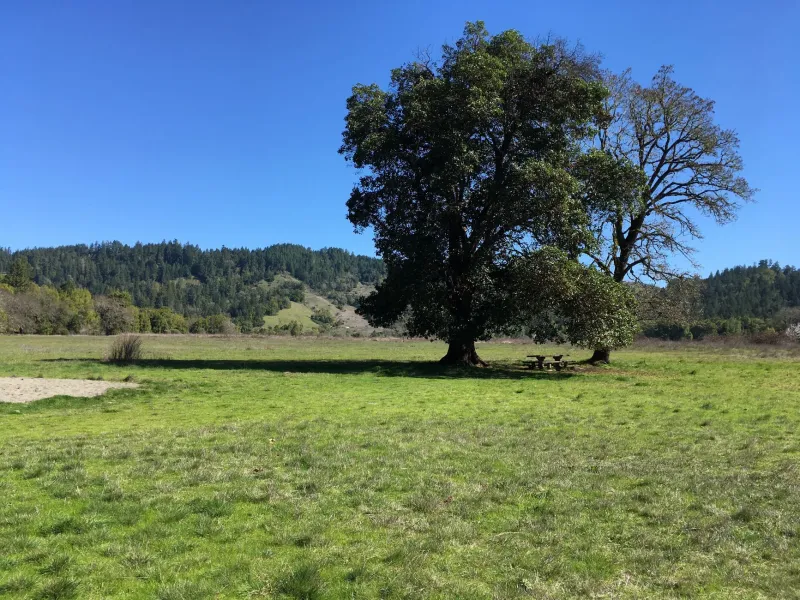
Humboldt County is home to roughly 135,000 residents spread across more than 3,500 square miles of coastline, river valleys, and forested highlands. That translates to fewer than 40 people per square mile — a figure that frequently appears in conversations about healthcare shortages, provider recruitment, and service gaps. Yet the same statistic that drives those challenges also quietly confers a set of epidemiological advantages that are rarely examined with the seriousness they deserve.
At LifeCare Humboldt, our mission is to support healthier communities across this region — and that means looking honestly at what the data actually shows, including the ways in which Humboldt's geography and demographics work in residents' favor.
Disease Transmission: When Distance Is Protective
Infectious disease spreads through contact. The more densely people live, work, commute, and gather, the more opportunities a pathogen has to move from one host to the next. This basic epidemiological principle has been studied extensively, and the findings consistently show that population density is one of the strongest predictors of respiratory illness transmission, gastrointestinal outbreak spread, and seasonal influenza intensity.
Humboldt County's relatively low contact rates — the average number of meaningful daily interactions a resident has outside the home — sit well below those recorded in California's major metropolitan areas. During the COVID-19 pandemic, rural counties with lower density generally experienced slower initial spread and longer windows for public health response, even when accounting for differences in healthcare infrastructure. Humboldt was no exception. That additional lead time allowed local agencies to coordinate testing, communicate guidance, and prepare facilities in ways that were simply not possible in areas where transmission was already exponential before interventions could be mobilized.
This dynamic applies beyond respiratory viruses. Foodborne illness clusters, vector-borne disease hotspots, and even hospital-acquired infection rates tend to correlate with population concentration. A county where residents have more physical space between them is, in measurable ways, a county where contagion has fewer pathways.
Contact Tracing and Targeted Intervention at Human Scale
One of the least-discussed advantages of a smaller, more dispersed population is the practical feasibility of precision public health work. Contact tracing — the process of identifying and notifying individuals who may have been exposed to a communicable disease — becomes exponentially more complex as population density increases. In large urban centers during outbreak events, contact tracing programs have routinely been overwhelmed within days, unable to keep pace with transmission chains that branch into hundreds of exposures simultaneously.
In Humboldt County, public health teams operate within a social geography that is genuinely manageable. Community networks are tighter, institutional relationships are more direct, and the lines of communication between county health officials and local providers, schools, and community organizations are shorter. When the Humboldt County Department of Health and Human Services issues guidance or launches a targeted health campaign, the infrastructure needed to reach a meaningful proportion of the population is less complex than in a county of several million.
This is not a trivial advantage. Effective outbreak response, vaccination campaigns, and chronic disease screening programs all depend on the ability to reach people quickly and with credibility. In smaller communities, trust is often more personal, and that trust translates into higher participation rates in public health initiatives.
Mental Health and the Density Gradient
The relationship between population density and mental health is a growing area of research, and the findings are worth examining carefully. Multiple large-scale studies — including research published in journals such as Nature and JAMA Psychiatry — have found elevated rates of anxiety disorders, psychosis, and depression among individuals raised in or currently living in dense urban environments, even after controlling for socioeconomic factors.
The mechanisms proposed include chronic noise exposure, reduced access to green and natural spaces, heightened social comparison, and the neurological effects of sustained crowding. Urban environments generate a particular kind of ambient stress — the persistent low-level stimulation of navigating crowds, traffic, and compressed living conditions — that accumulates over time.
Humboldt County residents are largely insulated from these stressors by the simple fact of their surroundings. Open space is not a weekend amenity here; it is the default condition of daily life. Whether that means a morning commute through redwood-lined roads, access to trails within minutes of most neighborhoods, or simply the auditory quiet of a county without major freeway corridors running through its population centers, the baseline sensory environment differs substantially from what urban Californians experience.
This does not mean Humboldt is without mental health challenges — our community faces real and documented struggles with substance use, economic stress, and access to behavioral health services. But the neurological baseline from which residents manage those challenges may carry certain inherent advantages that deserve acknowledgment and further study.
The Case for Community-Wide Health Initiatives
Public health professionals often speak of the difficulty of moving the needle on population-level health metrics. Changing dietary patterns, increasing physical activity rates, reducing tobacco use, or improving vaccination coverage across millions of people requires enormous resources, sustained campaigns, and often decades of effort. Even then, the signal in the data can be difficult to detect.
In a county of Humboldt's scale, community-wide health initiatives are not only more feasible — they are more measurable. When a local nonprofit partners with schools, clinics, and faith communities to promote a specific health behavior, the reach of that partnership represents a meaningful fraction of the total population. Outcomes are trackable. Adjustments can be made in real time. Successes are visible.
This is why Humboldt County has been able to serve as a genuine testing ground for innovative care models — from integrated behavioral health programs embedded in primary care settings to community health worker initiatives that extend the reach of clinical providers into underserved areas. The county's size makes pilot programs viable and evaluation rigorous in ways that larger jurisdictions struggle to achieve.
Reframing the Narrative
It is entirely appropriate to advocate for greater healthcare investment in Humboldt County, for expanded provider networks, for improved telehealth infrastructure, and for policy changes that recognize the unique needs of rural communities. Those conversations are important and ongoing.
But advocacy is strengthened, not weakened, by an honest accounting of what already works in our favor. Humboldt County's low population density is not simply a gap to be closed. It is also a structural feature that reduces transmission risk, enables responsive public health operations, supports mental wellness through environmental exposure, and makes community-scale health change genuinely achievable.
For residents, understanding this dynamic is itself a form of health literacy — a recognition that where you live shapes your health in ways that extend well beyond the location of the nearest hospital. For policymakers and health planners, it is a reminder that rural demography carries assets worth preserving and building upon, not merely deficits to be remedied.
At LifeCare Humboldt, we believe that building healthier communities requires seeing those communities clearly — with full attention to both their challenges and their strengths. Humboldt's open landscape is one of those strengths. The evidence supports it.