Ancient Trees, Modern Healing: How Humboldt's Redwood Forests Are Becoming Classrooms for Stress Relief
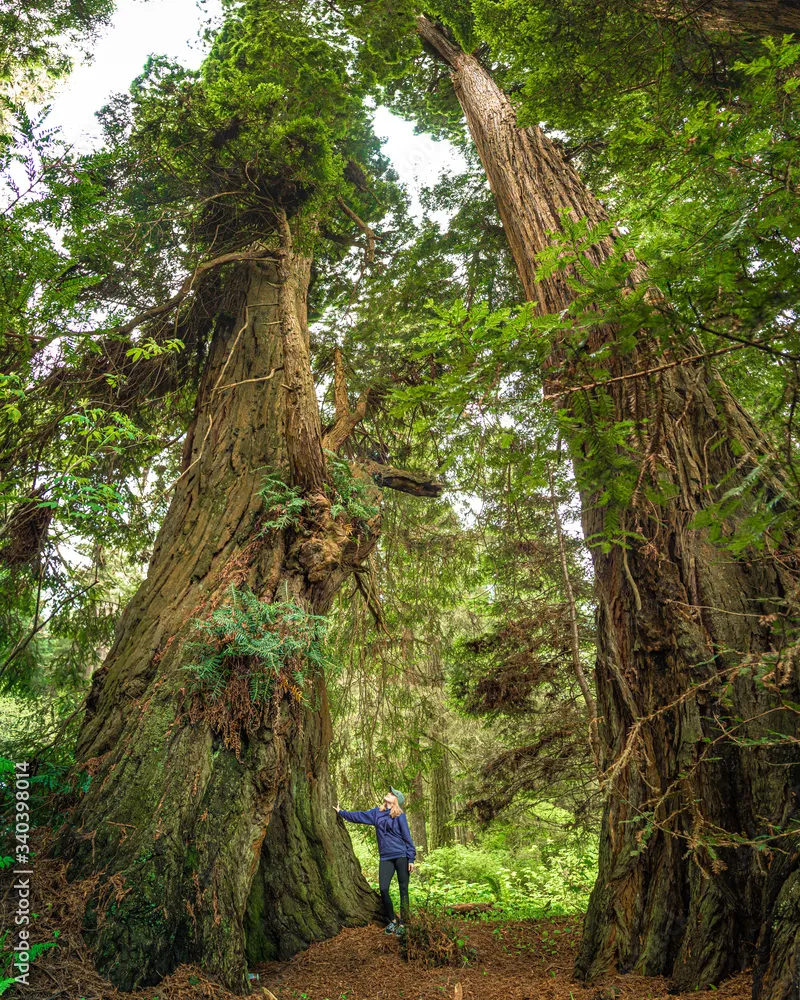
Photo: person standing in old growth redwood forest misty morning California, via as1.ftcdn.net
On a Tuesday morning in late October, a small group of people gathered at the trailhead of Prairie Creek Redwoods State Park. They were not hikers in the conventional sense. They carried no fitness trackers, no earbuds, no ambitious mileage goals. They were there, guided by a local licensed therapist, to simply be present among the trees. What they were practicing has a name: shinrin-yoku, a Japanese term that translates loosely to "forest bathing."
For Humboldt County residents, this concept may feel less like a trend and more like a homecoming.
What Forest Bathing Actually Is—and Is Not
Forest bathing is frequently misunderstood. It is not hiking. It is not birdwatching. It is not outdoor exercise in the traditional sense, though mild movement is often involved. At its core, shinrin-yoku is the intentional, unhurried immersion of one's senses into a forested environment. Practitioners are encouraged to slow their pace dramatically—sometimes covering less than a mile in two hours—while actively noticing what they hear, smell, touch, and see.
The practice originated in Japan in the 1980s, initially as a public health initiative in response to rising urban stress levels. Since then, it has been the subject of hundreds of peer-reviewed studies examining its physiological and psychological effects. The findings are notable. Research published in journals including Environmental Health and Preventive Medicine has documented reductions in cortisol levels, lower blood pressure, decreased heart rate, and improved mood and concentration among participants who spent time in forested environments compared to urban controls.
Scientists attribute many of these benefits to phytoncides—organic compounds released by trees, particularly conifers, that appear to support immune function and reduce stress hormone production when inhaled. Coastal redwoods (Sequoia sempervirens), which dominate much of Humboldt County's landscape, produce these compounds in abundance.
Why Humboldt County Is Uniquely Positioned for This Practice
Most regions that have embraced forest bathing do so with second-growth woodlands or managed parks. Humboldt County offers something genuinely rare: one of the last remaining old-growth temperate rainforest ecosystems in North America. The redwoods here are not merely large—they are ancient, some exceeding 2,000 years of age, with canopies so dense that rainfall is intercepted and redistributed across the forest floor in complex ecological patterns.
This environmental complexity matters for forest bathing in ways that are still being studied. The biodiversity of the understory, the perpetual moisture in the air, the layered soundscape of wind, water, and wildlife—all of these elements contribute to the sensory richness that makes immersive forest experiences so therapeutically distinct from a walk through a city park.
For Humboldt County residents who may face barriers to conventional mental health services—whether due to provider shortages, geographic isolation, or cost—this landscape represents a meaningful and accessible complement to formal care.
Local Practitioners Are Taking Notice
A growing number of mental health professionals in Humboldt County have begun incorporating nature-based approaches into their clinical work. While forest bathing is not a replacement for therapy or psychiatric care, several therapists in the region now recommend structured outdoor immersion as a between-session practice for clients managing anxiety, depression, and chronic stress.
Park rangers at Humboldt Redwoods State Park and Prairie Creek Redwoods State Park have similarly observed an increase in visitors who arrive not for recreation but for restoration. Staff have noted that guided slow-walk programs, when offered, tend to draw participants who describe themselves as seeking mental health benefits rather than physical ones.
Community members who have made forest bathing a regular practice report outcomes that align closely with the published research: improved sleep, reduced rumination, a greater sense of groundedness during periods of personal difficulty. For many, the proximity of world-class forest to their daily lives is something they had previously taken for granted.
How to Practice Forest Bathing Safely in Humboldt County
For those interested in beginning a forest bathing practice, the following guidance is offered with the understanding that the goal is quality of attention, not quantity of distance.
Choose an appropriate location. Humboldt Redwoods State Park, Prairie Creek Redwoods State Park, and Jedediah Smith Redwoods State Park all offer well-maintained trails suitable for slow, contemplative walking. Stick to established paths, particularly if you are new to the area's terrain.
Dress for the conditions. Humboldt County's forests are frequently cool and damp, even in summer. Layered, moisture-wicking clothing and waterproof footwear are recommended year-round. Inform someone of your intended location and expected return time.
Leave devices behind—or silenced. The neurological benefits of forest immersion are significantly reduced when attention is divided between the natural environment and a screen. If you carry a phone for safety purposes, consider placing it in a bag rather than a pocket.
Move slowly and pause often. Assign yourself a pace that feels almost uncomfortably unhurried. Stop frequently to notice specific sensory details: the texture of bark, the quality of light filtering through the canopy, the temperature of air moving through the understory.
Limit the duration of initial sessions. For those unaccustomed to extended outdoor time, one to two hours is sufficient to experience benefit without fatigue. Gradually extend sessions as comfort with the practice grows.
Consider a guided experience. Several local wellness practitioners and community organizations periodically offer guided forest bathing walks in the region. These structured experiences can be particularly valuable for individuals managing mental health conditions who benefit from professional facilitation.
A Note on Integration with Formal Care
LifeCare Humboldt encourages Humboldt County residents to view forest bathing as one component of a broader approach to mental wellness—not as a substitute for professional mental health services. If you are experiencing persistent symptoms of anxiety, depression, or other mental health concerns, we encourage you to connect with a qualified provider. Resources for locating mental health services in Humboldt County are available through the Healthcare Access & Resources section of this website.
The redwoods have stood for millennia. For those of us fortunate enough to live within reach of them, they offer something that no prescription can replicate: the quiet, unhurried presence of something far larger and older than our current difficulties. That, the science increasingly suggests, is worth paying attention to.