Breathing Through Fire Season: A Humboldt County Resident's Guide to Wildfire Smoke and Respiratory Health
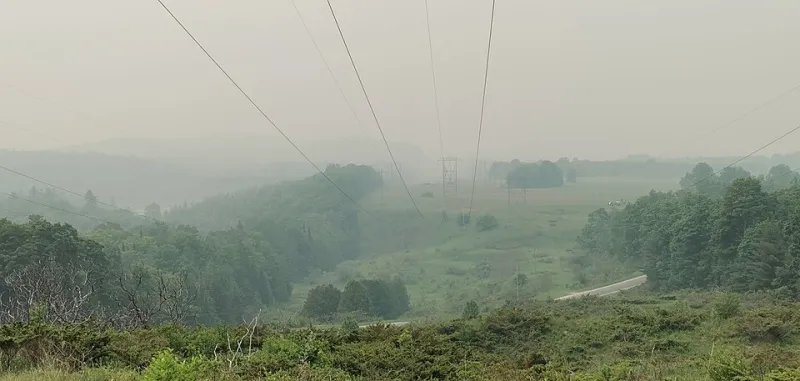
Photo: robin_ottawa, CC BY-SA 2.0, via Wikimedia Commons
For many Humboldt County residents, the arrival of late summer and fall carries a familiar anxiety — not just about fire risk to homes and forests, but about the air itself. Smoke from wildfires burning across the region and throughout the broader Pacific Northwest can settle into our valleys, drift along the coast, and linger for days. While Humboldt's geography offers some natural buffering compared to inland communities, no corner of the county is fully immune to the health consequences of heavy smoke events.
Understanding how to protect yourself and your family during these periods is not a luxury — it is an essential part of living well in this region. This guide offers actionable, evidence-informed steps that Humboldt residents can take before, during, and after a smoke event.
Why Wildfire Smoke Is Different From Other Air Pollution
Wildfire smoke is a complex mixture of fine particles, gases, and chemical compounds produced when vegetation, structures, and other materials combust. The most concerning component for human health is fine particulate matter, known as PM2.5 — particles so small they can penetrate deep into the lungs and, in some cases, enter the bloodstream.
Short-term exposure to elevated PM2.5 levels can trigger coughing, throat irritation, shortness of breath, and eye irritation even in otherwise healthy individuals. For people with asthma, chronic obstructive pulmonary disease (COPD), cardiovascular disease, or compromised immune systems, exposure to wildfire smoke can provoke serious exacerbations requiring urgent medical attention. Children, older adults, and pregnant individuals face heightened risk as well.
Humboldt County's coastal fog and marine layer can interact unpredictably with smoke, sometimes trapping particulates at low elevations rather than dispersing them. Residents should not assume that overcast skies mean clean air.
Monitoring Air Quality: The Tools Available to You
Staying informed is the foundation of any smoke-season strategy. Several free resources allow Humboldt residents to track local air quality conditions in real time.
AirNow (airnow.gov) is the federally maintained platform that aggregates data from official monitoring stations operated by the California Air Resources Board and local air quality management districts. The site displays the Air Quality Index (AQI) — a color-coded scale ranging from green (Good) to maroon (Hazardous) — and provides health guidance for each category.
PurpleAir supplements official monitoring with a network of low-cost sensors operated by community members. Because these sensors are more densely distributed, they can offer a more localized picture of air quality in neighborhoods that may be distant from official stations. The data should be interpreted alongside AirNow readings rather than in isolation, as sensor accuracy can vary.
The North Coast Unified Air Quality Management District (NCUAQMD) serves Humboldt, Del Norte, and Trinity counties and issues advisories specific to our region. Subscribing to their alerts is strongly recommended for households that include vulnerable individuals.
When the AQI climbs above 100 — the threshold at which air quality becomes unhealthy for sensitive groups — it is time to begin implementing protective measures. At AQI levels above 150, everyone should reduce outdoor exertion regardless of age or health status.
Protecting Indoor Air Quality
When outdoor air is compromised, your home becomes your most important line of defense. The following measures can meaningfully reduce indoor PM2.5 concentrations.
Seal your home as much as possible. Close windows and doors, and set any HVAC system to recirculate rather than draw in outside air. Use weatherstripping on drafty doors and windows if you have it available.
Use portable air purifiers with HEPA filtration. High-efficiency particulate air (HEPA) filters are effective at capturing fine particles. Place purifiers in the rooms where household members spend the most time, particularly bedrooms. If cost is a barrier, a box fan fitted with a MERV-13 furnace filter — sometimes called a Corsi-Rosenthal box — is a low-cost alternative with demonstrated effectiveness.
Avoid activities that add indoor pollutants. During smoke events, avoid burning candles, using gas stoves without ventilation, vacuuming (which can stir up settled particles), or smoking indoors. These sources compound the particle load your respiratory system must manage.
Create a designated clean room. If whole-home air purification is not feasible, designate one room — ideally one that can be sealed effectively — as a cleaner-air refuge for the most vulnerable household members.
Respiratory Protection Outdoors
For those who must be outside during smoke events, respiratory protection matters. Cloth masks and surgical masks offer minimal protection against fine particulate matter. N95 or KN95 respirators, when properly fitted and worn consistently, can filter a significant portion of PM2.5 particles.
Fit is critical. Facial hair, improper sizing, or gaps at the edges substantially reduce effectiveness. Residents who work outdoors — in agriculture, forestry, construction, or emergency services — should consult with their employers about appropriate respiratory protection protocols and ensure they have access to properly fitted respirators before smoke season begins.
Vulnerable Populations: Planning Ahead
For households that include individuals with asthma, COPD, heart disease, or other chronic conditions, preparation before smoke season arrives is far preferable to scrambling during an active event.
- Review and update action plans with your provider. If you or a family member has asthma or another respiratory condition, confirm that your written action plan is current and that you have an adequate supply of rescue medications.
- Identify cooling and clean-air centers. Humboldt County periodically opens public facilities as cooling and clean-air shelters during extreme heat and smoke events. Monitor announcements from Humboldt County Public Health and local emergency management for locations and hours.
- Prepare a go-bag with health supplies. Include medications, copies of prescriptions, and any medical devices such as nebulizers or inhalers.
When to Seek Medical Attention
Not every symptom during smoke season requires an emergency room visit, but certain signs warrant prompt evaluation. Contact a healthcare provider if you or a family member experiences:
- Chest pain or tightness that does not resolve with rest
- Significant difficulty breathing or wheezing that does not respond to rescue medication
- Persistent or worsening cough lasting more than a few days
- Unusual fatigue, dizziness, or heart palpitations during a smoke event
- Symptoms in infants or young children that interfere with feeding or sleep
For non-emergency concerns, telehealth options available through several Humboldt County providers offer a practical way to consult with a clinician without traveling during poor air quality conditions.
A Community Responsibility
Protecting respiratory health during wildfire season is both a personal and collective endeavor. Checking on elderly neighbors, sharing air quality information through community channels, and advocating for expanded public clean-air facilities are all meaningful contributions. At LifeCare Humboldt, we believe that a stronger, healthier community is built on exactly these kinds of mutual commitments — neighbor to neighbor, season to season.
Smoke season may be an annual reality in our region, but with preparation and the right resources, Humboldt County residents can navigate it with confidence.