Refills Beyond the Fog Line: A Practical Prescription Strategy for Outlying Humboldt

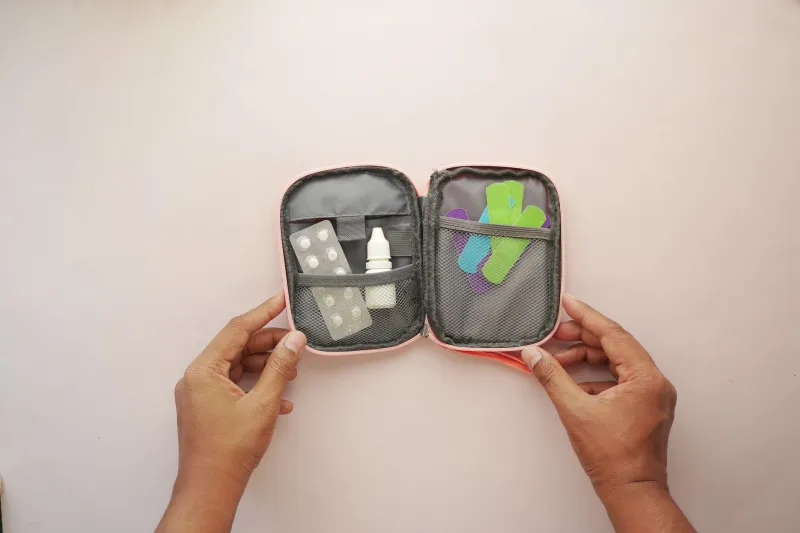
Photo by Photo by Jocelyn Allen on Unsplash on Unsplash
In Humboldt County, the distance to a pharmacy is rarely just a number on a map. For a resident in Petrolia, Hoopa, Orick, or a remote stretch of the Mattole, a refill can mean a half-day drive, a weather delay, and a choice between missing work and missing medication. That is why prescription access belongs in the same conversation as primary care, transportation, and chronic disease management. A reliable refill plan is not a convenience. It is part of staying well.
The Refill as a Rural Health Problem
Medication works only when it is taken consistently. Blood pressure medicines, diabetes supplies, asthma inhalers, thyroid medication, and mental health prescriptions all depend on a steady supply. When a refill is delayed by fog, a road closure, or a pharmacy closure, the health consequence can arrive quietly: a missed dose here, an unmanaged symptom there, and eventually an avoidable clinic visit or emergency department trip.
The challenge is not simply that pharmacies are far away. It is that rural residents often manage several prescriptions, several prescribers, and several insurance rules at once. A 40-mile trip can become an 80-mile round trip. A pharmacy counter that closes at 6}p.m. can conflict with a work schedule. A caregiver may be picking up medications for a parent, a child, and a neighbor. The goal is not to eliminate every trip. It is to reduce avoidable gaps and make the remaining trips count.
Comparing the Common Workarounds
Mail-order and central fill
Mail-order pharmacies can deliver 90-day supplies and automatic refills, which makes them attractive for maintenance medications. They can reduce trips and may lower costs under some insurance plans. But rural delivery has limits. Packages may sit on porches, weather can delay shipments, and temperature-sensitive medications may require special handling. Controlled substances often cannot be mailed in the same way. Residents should confirm whether their plan allows a local backup pharmacy and how refills are handled if a shipment is late.
Clinic dispensaries and integrated pharmacies
Some community health centers operate dispensaries or partner with pharmacies that serve their patients. The advantage is communication: the prescriber and pharmacist can resolve questions quickly, and medication changes can be coordinated during a visit. The limitation is capacity. Hours may be limited, formularies may vary, and not every clinic has an on-site pharmacy. Patients should ask whether their clinic has a dispensary, who is eligible, and whether refills can be mailed or picked up at a satellite site.
Synchronized prescriptions
Medication synchronization aligns refill dates so that multiple prescriptions can be picked up in one trip. It is one of the simplest tools available, but it requires planning. Not every medication can be synchronized, especially controlled substances or drugs with unusual dosing schedules. A patient can ask a pharmacist to review the full medication list and identify which refills can be aligned. The result is fewer trips and fewer last-minute scrambles.
Neighbor and family delivery networks
In many outlying communities, a neighbor who is already driving to Eureka, Arcata, or Fortuna picks up a prescription for someone else. These informal networks are practical and deeply rooted in rural life. They work best when expectations are clear: who is authorized to pick up, how medications will be stored, and how privacy will be protected. For controlled substances, pharmacy and legal rules must be followed carefully. A neighbor network is a useful backup, not a substitute for a pharmacy relationship.
Local delivery and courier services
Some pharmacies offer delivery along limited routes. Availability, fees, and scheduling vary. Residents should ask directly whether delivery is possible, how far it extends, and whether refrigerated items can be safely transported. A delivery service is most useful when it is arranged in advance, not requested during an urgent shortage.
A 2026 Checklist for a More Reliable Plan
- Keep an up-to-date medication list with doses, prescribers, pharmacy names, and refill dates. Store a paper copy where a caregiver can find it.
- Ask each pharmacy whether 90-day refills and automatic refills are available.
- Request a medication synchronization review at least once a year.
- Identify a primary pharmacy and a backup pharmacy, and confirm how transfers work.
- For temperature-sensitive medications, ask about shipping, cooler storage, and what to do if a package is delayed.
- Set reminders at least ten days before a refill is due, not on the day it runs out.
- Use one pharmacy when possible so that interactions and duplicate therapies can be checked.
- Confirm which family members or caregivers are authorized to pick up prescriptions.
- Ask whether the clinic has a dispensary or a nearby partner pharmacy.
- Keep pharmacy, insurer, and clinic phone numbers in a phone and on paper.
- Check road conditions before scheduling a pickup trip, especially on Highway 101, Highway 299, and Highway 36.
- Review the plan after any formulary change, insurance change, or move.
When the Drive Is Unavoidable
Some trips cannot be avoided. In that case, batch errands: combine the pharmacy stop with a medical appointment, grocery shopping, or lab work. Carpool when possible. Ask whether a prescription can be transferred to a pharmacy closer to an appointment. Avoid stockpiling beyond what a prescriber and insurer allow, but do ask how to prevent a gap during a known storm or road closure.
Building a Layered Plan
No single workaround solves prescription access in rural Humboldt. Mail-order, clinic dispensaries, synchronized refills, delivery, and neighbor networks each solve part of the problem. The most reliable plan uses more than one. Patients and families who review their medications, confirm their options, and write down a backup plan are not being overly cautious. They are recognizing that in a county this large, the pharmacy counter is only one part of the care journey.